2026-08-05 17:11:58
How Designers and Contractors Can Match Teak Outdoor Furniture with Project Layout and Site Conditions
Selecting the right outdoor teak furniture for contractors and designers should begin with the project layout, functional requirements, and site conditions rather than furniture appearance alone. Matching furniture to how each outdoor space will be used helps improve user comfort, operational efficiency, and the overall success of hospitality and commercial projects.
Many outdoor projects encounter avoidable challenges because furniture decisions are made too late or based only on visual preferences. A layout that looks attractive on paper may become inefficient if furniture sizes, circulation paths, and daily usage patterns are not considered from the beginning.
This article explains how designers and contractors can select teak outdoor furniture based on space function, project layout, traffic flow, and environmental conditions. It also provides practical comparison tables and specification checklists to support better planning before procurement begins.
How to Match Teak Outdoor Furniture with Project Layout and Site Conditions
Successful outdoor furniture planning starts by understanding how people will use the space every day. Instead of choosing furniture solely for its appearance, designers and contractors should evaluate the function of each area, available space, user circulation, and environmental conditions to ensure every furniture piece supports both aesthetics and operational needs.
This approach minimizes costly layout revisions, improves the guest experience, and simplifies procurement because every product is selected with a clear purpose. For hospitality and commercial projects, thoughtful planning also creates outdoor spaces that remain functional long after construction is complete.
Start from the Function of Each Outdoor Area
Every outdoor zone serves a different purpose, meaning furniture should be selected according to the activities that take place there. Matching furniture with each area's function creates a more comfortable environment while supporting smoother daily operations for both visitors and staff.
1. Dining Area
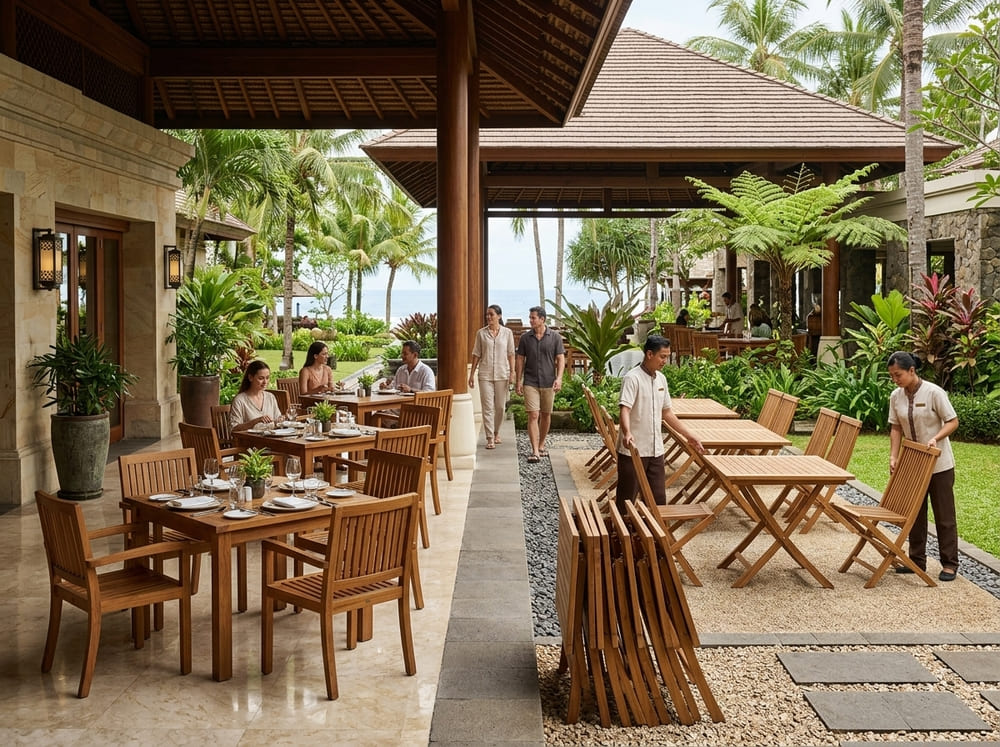
Outdoor dining areas require furniture that remains stable during continuous use while providing adequate space for meals and staff movement. Fixed chairs, fixed tables, and extended tables are commonly specified because they create organized seating arrangements that are easy to maintain in restaurants, cafés, hotels, and resort dining terraces.
The furniture layout should also allow comfortable circulation between tables without making the dining area feel crowded. Proper spacing improves both customer experience and service efficiency during busy operating hours.
2. Lounge Area
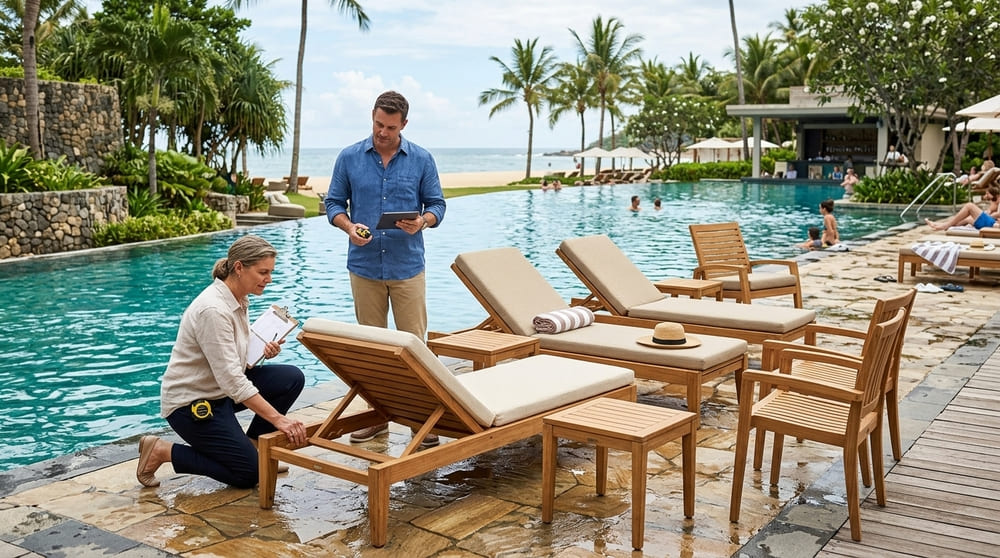
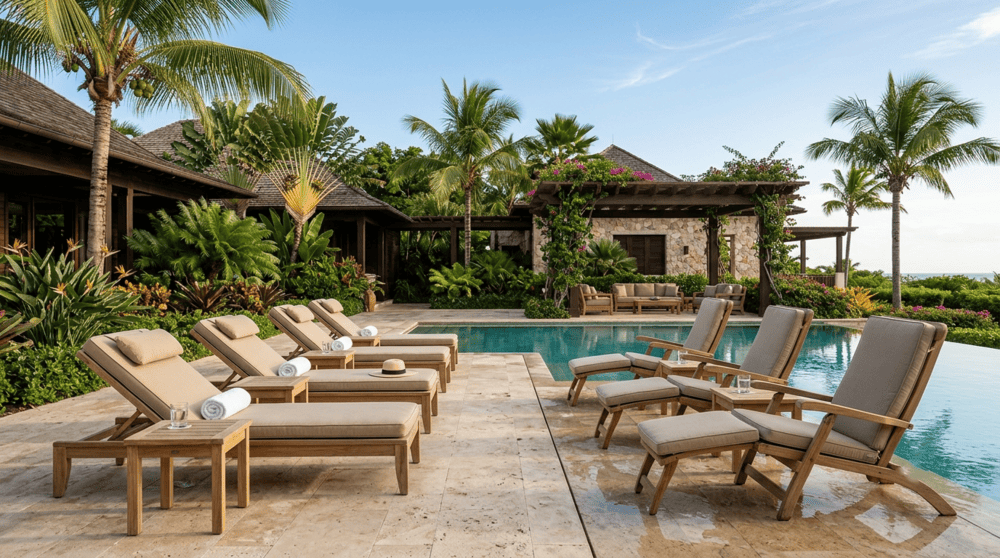
Lounge areas are designed for guests who intend to relax longer, making comfort a higher priority than seating capacity. Loungers, steamer chairs, and reclining chairs create a resort-inspired atmosphere while encouraging guests to spend more time enjoying outdoor facilities such as poolside decks, garden terraces, or scenic viewpoints.
Selecting ergonomic furniture with generous seating proportions also enhances the perceived quality of the outdoor environment. This is particularly valuable for hospitality projects where guest satisfaction directly influences business performance.
For relaxation-focused zones, outdoor reclining chairs can help designers create seating areas that support longer stays, better comfort, and a stronger resort-style atmosphere.
3. Waiting or Garden Area
Waiting areas and landscaped gardens benefit from furniture that offers comfortable seating without disrupting the openness of the surrounding space. Benches and tree benches provide practical resting points while naturally blending into parks, courtyards, hotel entrances, walkways, and outdoor commercial environments.
Besides serving functional purposes, these furniture pieces contribute to the visual composition of the landscape by defining gathering points without requiring permanent structural partitions.
The following table provides a simple reference for matching each outdoor project area with its primary functional requirements and the most suitable teak furniture categories.
| Project Area | Primary Requirement | Suitable Furniture |
| Dining Area | Stable dining arrangement and efficient service flow | Fixed Chair, Fixed Table, Extended Table |
| Lounge Area | Long-duration comfort and relaxation | Lounger, Steamer Chair, Reclining Chair |
| Waiting or Garden Area | Casual seating and landscape integration | Bench, Tree Bench |
Check the Available Space Before Choosing Furniture Size
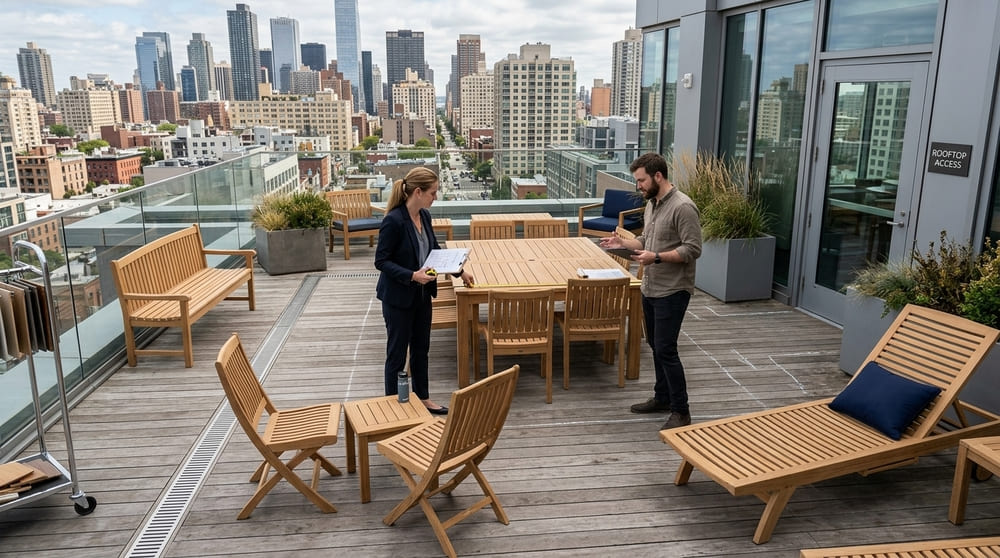
Furniture dimensions should always be planned according to the available outdoor space rather than selected independently from the layout. Choosing furniture that fits the site's scale helps maintain comfortable circulation, prevents overcrowding, and ensures the outdoor environment remains functional for both guests and operational staff.
A dining table that works well in a spacious resort courtyard may overwhelm a compact café terrace, while oversized loungers can reduce usable circulation around poolside areas. Measuring the installation area before finalizing furniture specifications helps designers avoid unnecessary revisions during installation and supports more efficient procurement planning.
Match Furniture Type with Daily Traffic Flow
Daily traffic patterns influence how outdoor furniture performs over time. High-traffic areas require furniture with greater stability and durability, while lower-traffic or multi-purpose spaces can benefit from more flexible furniture that is easy to move and reconfigure when needed.
Understanding how guests and staff move through the site also helps reduce congestion and improves operational efficiency. By matching furniture selection with traffic intensity, contractors and designers can create outdoor spaces that remain comfortable during both normal operations and peak occupancy.
The table below summarizes suitable furniture recommendations based on different levels of outdoor activity.
| Activity Level | Example Location | Recommended Furniture |
| High Traffic | Outdoor restaurant, hotel dining terrace, main entrance | Fixed Chairs, Fixed Tables, Benches |
| Medium Traffic | Courtyard, café terrace, garden seating | Benches, Extended Tables, Reclining Chairs |
| Flexible / Multi-Use | Event lawn, outdoor function area, community space | Folding Chairs, Folding Tables |
Consider Site Conditions Like Sun Exposure, Poolside Areas, and Open Gardens
Site conditions play an equally important role in furniture selection because every outdoor environment presents different functional requirements. Designers and contractors should evaluate factors such as direct sunlight, proximity to water, surrounding landscaping, and exposure to open weather before deciding which furniture categories are most appropriate.
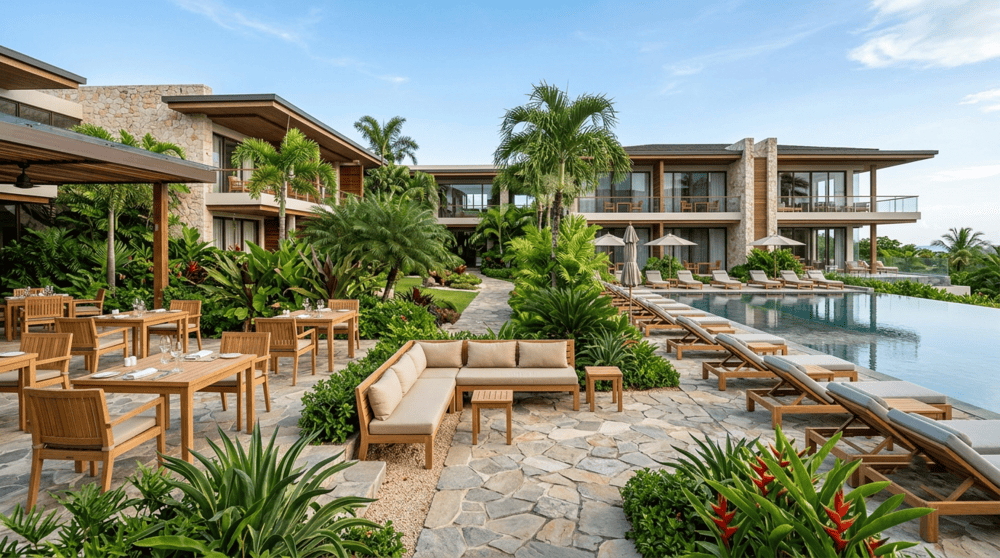
Poolside areas often benefit from loungers and steamer chairs that support extended relaxation, while open gardens may be better suited to benches or teak dining sets that blend naturally with the landscape. Selecting furniture that complements its surroundings helps create a cohesive outdoor environment while improving durability and long-term usability.
Choose Flexible Furniture for Multi-Use Project Areas
Many hospitality and commercial projects require outdoor spaces that can accommodate different activities throughout the year. Folding chairs and folding tables provide practical flexibility for event spaces, seasonal dining expansions, community gatherings, or temporary seating arrangements without requiring permanent layout changes.
This adaptability allows property owners to maximize the use of available space while reducing the need for additional furniture purchases. For contractors and designers, specifying flexible furniture also gives clients greater freedom to adjust layouts as operational needs evolve.
This is especially useful for compact or changing outdoor areas, where flexible teak furniture can help maintain comfort, movement, and layout efficiency without making the space feel crowded.
Use Statement Furniture to Strengthen the Project Concept
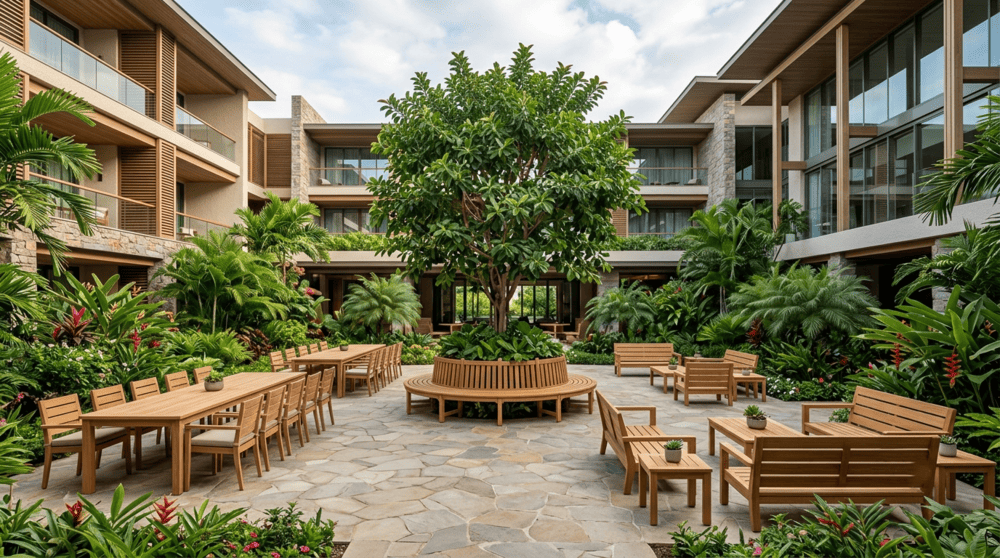
Statement furniture helps reinforce the design identity of an outdoor project beyond its functional purpose. Elements such as tree benches, loungers, teak dining sets, and reclaimed teak furniture can become focal points that support concepts ranging from tropical resort and natural landscapes to rustic cafés and premium commercial developments.
Rather than treating these pieces as decorative additions, designers should integrate them into the overall project narrative so they contribute to both visual appeal and user experience. A carefully selected statement piece often creates stronger design recognition without overwhelming the surrounding space.
Prepare a Simple Furniture Specification Before Procurement
Preparing a furniture specification before procurement reduces the likelihood of ordering errors and simplifies communication between designers, contractors, suppliers, and project owners. A clear specification ensures every furniture item meets the intended design concept, functional requirements, and installation conditions before production begins.
Basic documentation does not need to be overly complicated, but it should provide enough detail to support accurate manufacturing, quotation, logistics, and installation planning.
Before placing an order, use a simple specification checklist like the one below to ensure all essential information has been prepared.
| Specification Detail | Purpose | Example Information to Record |
| Product Type | Ensure correct furniture selection | Fixed Chair, Lounger, Tree Bench |
| Dimensions | Confirm compatibility with project layout | 180 × 70 × 35 cm |
| Quantity | Support procurement and production planning | 24 units |
| Installation Area | Allocate furniture correctly | Poolside, Garden, Dining Terrace |
| Finish | Maintain design consistency | Natural Teak Oil Finish |
| Intended Function | Match furniture with usage | Dining, Waiting, Relaxation |
FAQ About Matching Teak Outdoor Furniture with Project Layout and Site Conditions
The following questions address common considerations from designers, contractors, and project buyers when selecting teak outdoor furniture for hospitality and commercial developments.
1. What teak outdoor furniture is suitable for hotel and resort projects?
Hotels and resorts typically require a combination of dining furniture, lounge seating, benches, loungers, and teak sets. The ideal selection depends on the function of each outdoor area and the overall guest experience the project aims to create.
2. How do designers choose outdoor furniture based on project layout?
Designers usually begin by identifying how each outdoor zone will be used, evaluating circulation paths, and measuring available space. Furniture is then selected to complement both the operational requirements and the project's design concept.
3. What furniture is best for high-traffic outdoor areas?
High-traffic spaces generally benefit from stable furniture such as fixed chairs, fixed tables, and durable benches. These products provide consistent performance while helping maintain an organized layout during daily operations.
4. Are folding teak chairs suitable for project-based outdoor spaces?
Yes. Folding teak chairs are an excellent option for areas that require frequent layout adjustments, including outdoor events, overflow dining, and multifunctional hospitality spaces where flexibility is important.
5. Why should contractors prepare furniture specifications before ordering?
A detailed specification document helps prevent ordering mistakes by defining product types, dimensions, quantities, finishes, installation locations, and intended functions. This also improves communication between project teams, suppliers, and manufacturers.
Conclusion: Good Outdoor Furniture Selection Should Follow the Layout, Function, and Site Condition
Selecting outdoor teak furniture for contractors and designers should always begin with understanding how each outdoor area will be used, followed by evaluating the available space, daily traffic flow, and site conditions. These considerations help ensure that every furniture choice supports both operational efficiency and the project's visual concept.
If your project includes multiple outdoor functions, choose furniture based on the purpose of each zone rather than applying the same solution throughout the site. By preparing clear furniture specifications before procurement, designers and contractors can streamline purchasing, reduce revisions, and create outdoor environments that are comfortable, cohesive, and built for long-term use.
Create Outdoor Project Solutions with the Right Teak Furniture Selection
A successful outdoor project is not only defined by attractive furniture but also by how well every piece supports the layout, site conditions, and intended user experience. Choosing products that align with your design concept from the beginning helps minimize procurement issues while creating outdoor spaces that remain practical and visually consistent over time.
For contractors and designers working on outdoor projects, Kusuma Furniture provides teak furniture options such as benches, tree benches, fixed chairs, folding chairs, extended tables, folding tables, loungers and reclaimed teak furniture for commercial and hospitality spaces. With a comprehensive product range and manufacturing expertise, Kusuma Furniture helps bring outdoor concepts to life with reliable, high-quality teak furniture solutions.
Recent Articles