2025-12-23 11:28:29
Outdoor Dining Area Looks Crowded Fix Layout Issues with Extendable Teak Tables
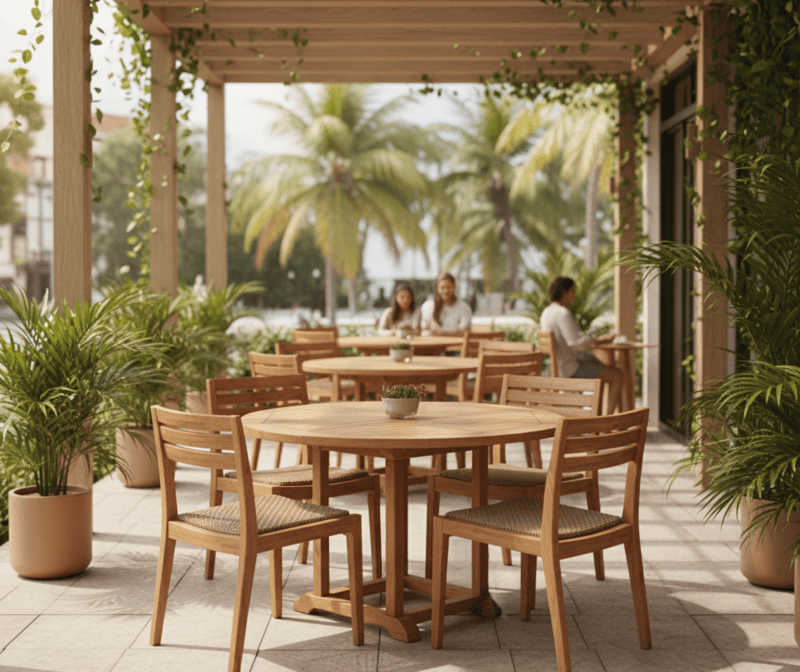
A crowded outdoor dining area is rarely caused by limited space—it is usually the result of a rigid layout that cannot adapt to changing guest volume. When tables remain oversized throughout the day, circulation becomes restricted, staff movement slows down, and guests feel uncomfortable even during moderate traffic. One of the most effective ways to solve this issue is using an extendable teak outdoor dining table for small dining areas, allowing seating capacity to expand only when needed while keeping the layout clean and open during daily operations.
In short, improving outdoor dining flow requires understanding movement patterns, using furniture that adapts to demand, and arranging seating with flexibility in mind.
Key Layout Principles to Reduce Outdoor Dining Congestion
To keep outdoor dining areas functional and visually open throughout the day, these principles should guide the layout strategy—especially when working with small or compact spaces:
- Identify circulation bottlenecks that disrupt guest and staff movement
- Keep extendable tables in compact mode during regular service hours
- Extend table length only during peak periods or group reservations
- Align table expansion with chair placement to protect walkways
- Pair extendable tables with modular seating for fast reconfiguration
These principles form the foundation for a layout that adapts to demand without permanently overcrowding the space.
Identify Movement Flow Bottlenecks
Smooth circulation is the backbone of a successful outdoor dining layout. Bottlenecks often appear where service aisles are too narrow, gaps between tables are inconsistent, or chairs intrude into walking paths. These problem areas become most noticeable during busy service periods, when staff and guests share the same circulation routes.
By observing traffic flow during both off-peak and peak hours, operators can identify where congestion consistently occurs. Once these bottlenecks are mapped, extendable tables can be placed strategically—remaining compact in high-traffic zones and expanding only where circulation allows.
Use Compact Mode for Daily Operations
For everyday service, keeping extendable teak tables in their compact configuration helps maintain a spacious and organized dining area. A smaller table footprint reduces visual clutter, creates wider walkways, and improves service efficiency without limiting functionality.
Compact mode is particularly effective for small dining areas, where every centimeter matters. This setup ensures the space feels intentionally designed rather than overcrowded, even during normal operating hours.
Extend Only During Crowded Hours
One of the strongest advantages of an extendable teak outdoor dining table for small dining areas is its ability to scale only when guest volume increases. Instead of permanently enlarging the layout, tables can be extended during lunch rushes, weekends, or special events—keeping the space visually open at other times.
For a closer look at how rectangular extendable dining sets improve seating efficiency while maintaining layout balance, you may find this related article helpful Benefits of a Rectangular Extendable Outdoor Dining Set
Align Expansion with Chair Placement
Extending tables without adjusting chair placement often leads to blocked pathways and disrupted circulation. To avoid this, the expanding side of the table should face low-traffic zones rather than main service aisles.
Using lightweight or easily movable chairs further reduces disruption during expansion. Maintaining a small buffer behind seated guests ensures staff can circulate comfortably, even when tables are fully extended. This alignment keeps movement smooth while preserving guest comfort.

Pair with Modular Seating for Flexibility
Extendable tables perform best when paired with modular seating such as stackable chairs, movable stools, or outdoor benches. This combination allows restaurants to adjust seating capacity quickly without reworking the entire layout.
In warmer environments, modular seating also pairs well with shaded setups—similar to configurations inspired by a teak couple bench parasol for hot outdoor areas. Together, these elements support comfort, flexibility, and efficient use of limited space.
Conclusion
Fixing a crowded outdoor dining area starts with adapting the layout—not expanding the footprint. By identifying movement bottlenecks, keeping extendable teak tables compact during daily operations, and extending them only during peak hours, small dining areas can remain organized and functional. Aligning table expansion with thoughtful chair placement protects circulation, while modular seating adds the flexibility needed for fast reconfiguration. When combined with teak’s durability and comfort, these strategies create outdoor dining spaces that feel open, efficient, and ready for fluctuating guest volumes.
Start Sourcing Flexible Outdoor Dining Solutions
Flexible layouts require furniture designed to adapt. Kusuma Furniture offers extendable table including the extendable teak outdoor dining table for small dining areas, built for durability, ease of use, and daily commercial performance.
Create an outdoor dining layout that adapts to your operations—not the other way around.