2026-05-05 14:07:28
Outdoor Furniture Looks Good but Wears Out Quickly Hidden Design Flaws That Reduce Lifespan in Commercial Use
Outdoor furniture often fails in commercial environments not only because of material limitations, but due to structural design flaws, poor ergonomics, and overlooked technical details that cannot withstand intensive use. Choosing the right design is essential to extend lifespan and ensure operational efficiency.
In many hospitality and commercial projects, outdoor furniture initially appears visually appealing and high-quality, yet begins to deteriorate within months of use. This issue frequently arises in hotels, restaurants, and resorts where furniture is exposed to continuous usage, weather changes, and operational demands. The reality is that outdoor furniture durability problems in hospitality are rarely caused by appearance or finishing, but by deeper design flaws that are not immediately visible.
Main Problem: Furniture Looks Good but Fails in Real Usage
The core issue behind why outdoor furniture fails in commercial environments lies in the gap between aesthetic design and functional durability. What looks impressive in catalogs often does not perform under real-world pressure.
1. Why Many Furniture Pieces Fail After a Few Months of Use
Furniture designed without considering high-frequency usage tends to weaken quickly under repeated stress and load. For example, chairs in a busy café may be used hundreds of times daily, far beyond residential expectations. This leads to structural fatigue and early failure.
2. Difference Between Residential and Commercial Furniture Needs
Residential furniture is designed for occasional use, while commercial environments demand continuous durability and resilience. A table suitable for home patios may not survive daily exposure in a restaurant setting. This mismatch is a major cause of commercial outdoor furniture lifespan issues.
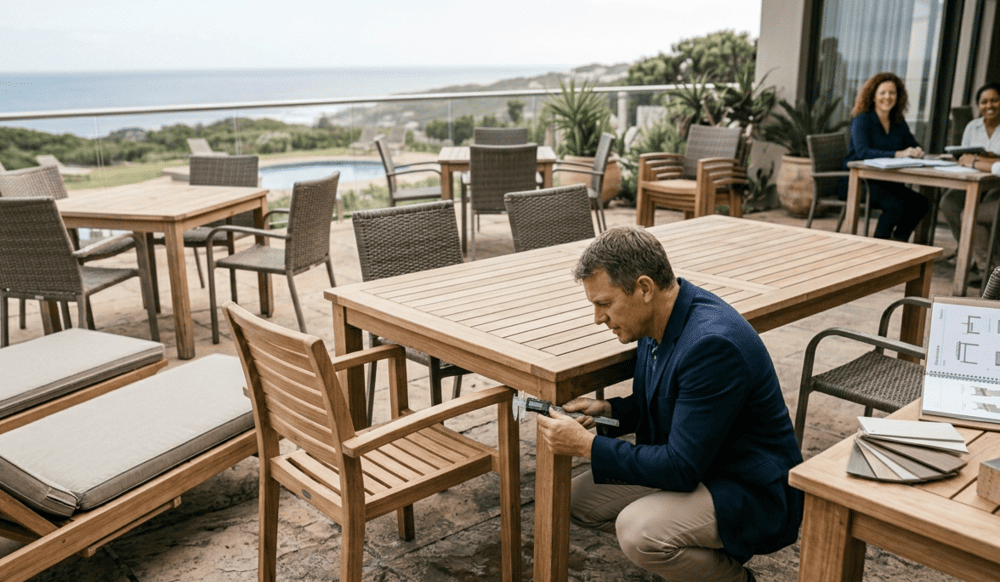
Main Causes of Fast Wear (Design Flaws)
Understanding furniture design flaws for outdoor use is critical to preventing premature damage and costly replacements.
1. Weak Joint Construction Not Designed for High Load
Joints are the most vulnerable part of any furniture structure, and weak connections can loosen or break under constant use. For instance, poorly reinforced joints in wooden chairs may start wobbling within weeks. Strong joinery systems are essential for long-term durability.
2. Lack of Proper Water Drainage System
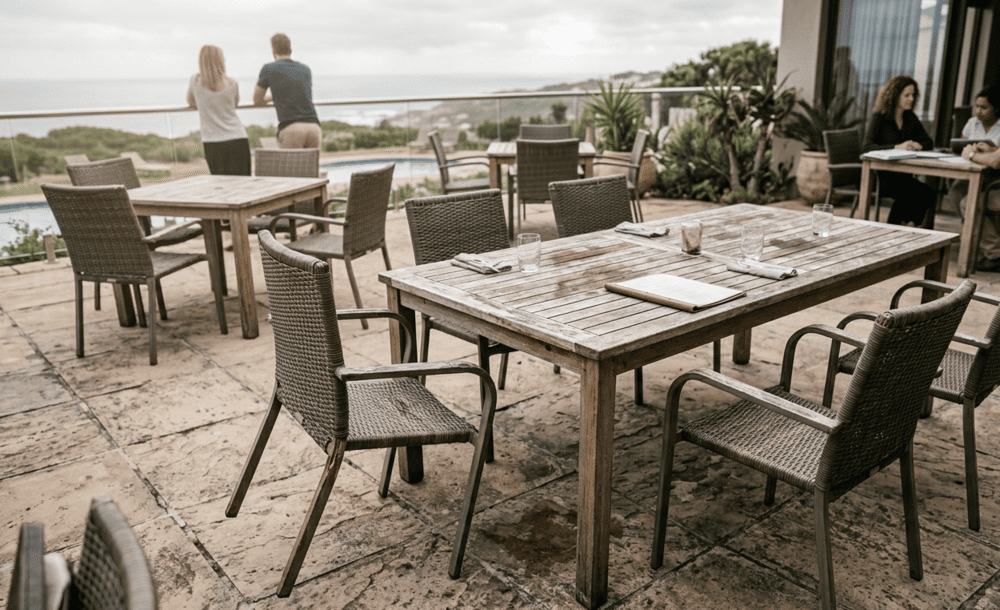
Outdoor furniture exposed to rain without drainage design allows water to accumulate, accelerating material degradation. A flat seating surface without drainage holes can trap water and cause swelling or rot. This is a common example of outdoor furniture water damage design flaws.
3. Poor Ergonomics Leading to Underutilization
Furniture that looks appealing but feels uncomfortable often gets avoided by users, reducing its functional value. For example, a stylish bench with poor back support may remain unused in a public area. This highlights how ergonomics directly impacts usability and ROI.
4. Improper Weight Design Affecting Operations
Furniture that is too heavy becomes difficult to move, while overly lightweight pieces may lack stability in outdoor conditions. In windy environments, lightweight chairs may tip over easily. Balanced weight design is crucial for both safety and operational efficiency.
Comparison Table: Good Design vs Problematic Design
To better understand the difference between functional and problematic furniture design, the comparison below highlights key aspects that directly impact durability and usability:
| Aspect | Problematic Design | Proper Design |
| Joint/Structure | Easily loosens | Strong & load-resistant |
| Drainage | Water accumulates | Water flows out efficiently |
| Ergonomics | Uncomfortable | Comfortable for long use |
| Weight | Unstable / too heavy | Balanced & functional |
| Structure | Aesthetic-focused only | Balanced function & aesthetics |
Solutions: How to Choose Durable Outdoor Furniture Design
To address how to choose durable outdoor furniture design, decision-makers must prioritize structure and functionality over visual appeal.
1. Choose Furniture with Structure Designed for Commercial Use
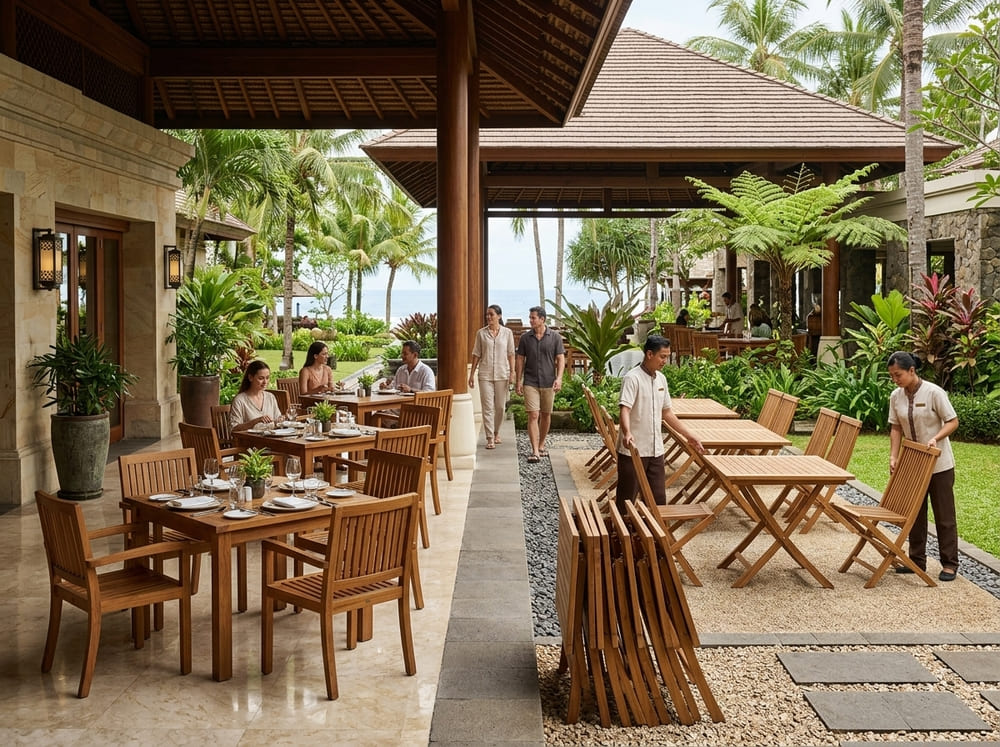
Commercial-grade furniture is engineered to handle repeated stress, weight, and environmental exposure. For example, reinforced teak structures can withstand heavy daily use in hospitality settings. This reduces long-term replacement costs.
2. Ensure the Design Includes a Drainage System
Drainage is often overlooked but critical in preventing water-related damage. Furniture with slatted surfaces or hidden drainage channels can significantly extend lifespan. This small detail has a major impact on durability.
3. Evaluate Ergonomics Based on Real Usage Scenarios
Comfort should be tested in real-life conditions, not just visually assessed. A chair used for dining should support extended sitting without discomfort. This ensures both user satisfaction and functional efficiency.
Proper timeline alignment is also a key factor in overcoming furniture supply challenges in projects.
4. Consider Balance Between Weight and Stability
Furniture should be easy to handle while remaining stable in outdoor conditions. For example, stackable chairs with proper weight distribution can improve operational workflow. This balance supports both usability and safety.
Furniture Design Evaluation Checklist
Before selecting outdoor furniture, use this checklist to ensure optimal performance:
1. Are the joints strong enough for intensive use: Ensure connections are reinforced and designed to withstand repeated load and movement.
2. Does the design allow proper water drainage?
Check if water can flow out easily to prevent damage from moisture accumulation.
3. Is it comfortable for long-duration use?
Evaluate seating comfort, back support, and usability in real conditions.
4. Is the weight suitable for operational needs?
Furniture should be easy to move but stable enough to remain safe outdoors.
5. Does the structure ensure stability?
A well-balanced structure prevents tipping and maintains durability over time.
Additional Tips
These insights help avoid common furniture design mistakes in hospitality projects and improve long-term performance.
1. Do Not Rely Solely on Catalog Visuals or Product Photos
Images often highlight aesthetics but do not reveal structural weaknesses or durability limitations. A visually appealing chair may fail under real usage conditions. Always verify beyond appearance.
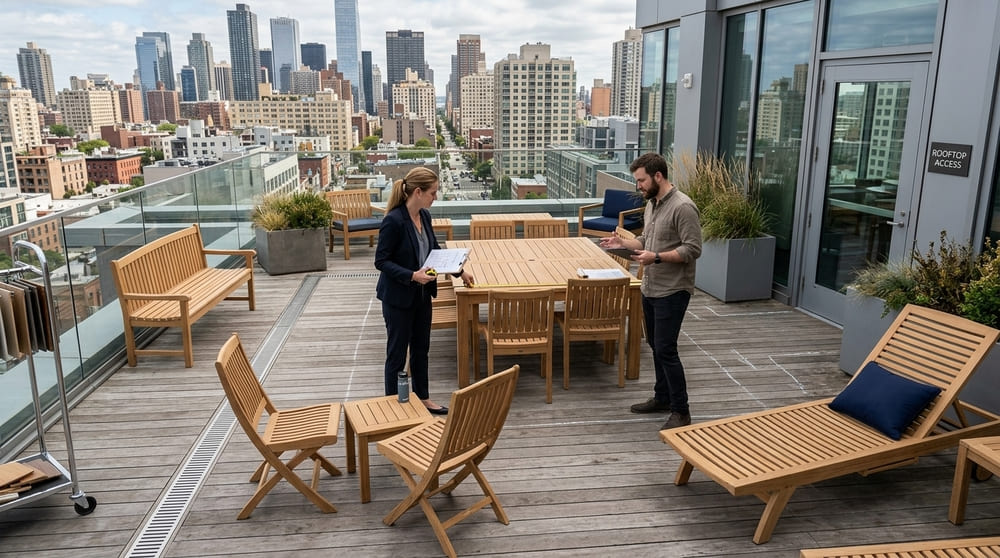
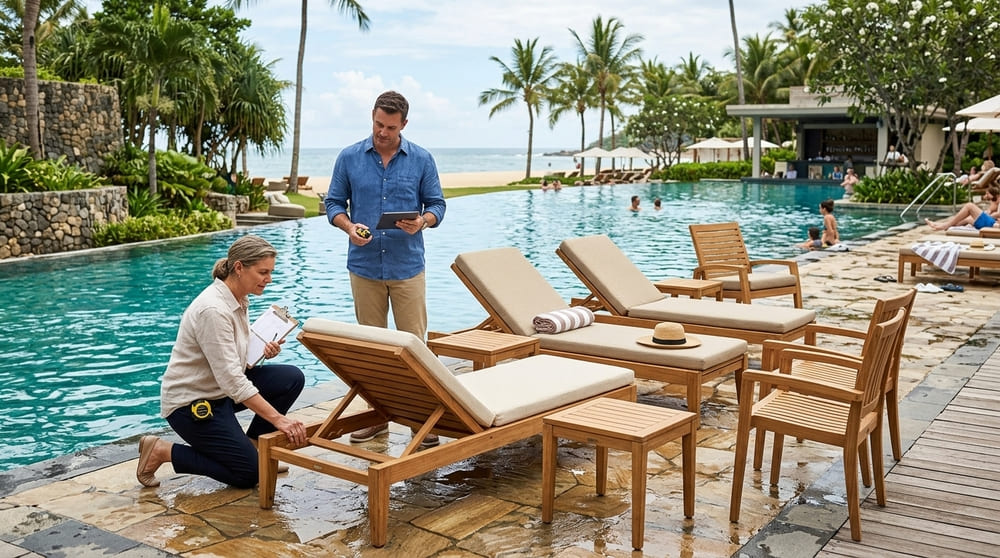
2. Test Furniture in Simulated Real Usage Conditions
Testing furniture under conditions similar to actual use can reveal hidden weaknesses. For example, placing furniture in outdoor exposure tests can show durability issues early. This is more reliable than sample inspection alone.
FAQ (People Also Ask)
These frequently asked questions address common concerns regarding outdoor furniture performance in commercial settings.
1. Why does outdoor furniture wear out quickly in hotels or restaurants?
Because of intensive usage combined with designs that are not engineered for high load and frequent use.
2. Is all outdoor furniture suitable for commercial use?
No, only furniture specifically designed for high-frequency and heavy-duty use can perform reliably in commercial environments.
3. What is the most important factor in choosing durable outdoor furniture?
Structural design, technical details, and build quality matter more than material alone.
4. How can you evaluate furniture design quality before purchasing?
Check joint strength, stability, ergonomic comfort, and design features like drainage systems.
Conclusion: Design Determines Lifespan, Not Just Material
Many outdoor furniture failures occur due to design flaws rather than material quality, making structural evaluation essential before purchase. These flaws are often invisible during initial inspection but become critical under real usage conditions. Evaluating design thoroughly is a long-term investment that reduces operational risk and cost.
Invest in Outdoor Furniture That Performs Beyond First Impressions
Choosing the right partner ensures your furniture is built not just to look good, but to last under demanding conditions. Kusuma Furniture provides outdoor furniture solutions specifically designed for commercial use—ranging from chairs and tables to loungers and teak sets—combining durability, ergonomic design, and aesthetic value. Contact Kusuma Furniture today to secure outdoor furniture that supports your project’s long-term success without compromise.
Recent Articles