2026-09-15 15:38:23
Outdoor Teak Furniture Maintenance Schedule Based on Location and Exposure Level
An outdoor teak furniture maintenance schedule should be based on location and exposure. Inspect furniture on covered patios every 2–4 weeks, in open gardens every 1–2 weeks, and around pools or coastal areas at least weekly. For hotels, restaurants, and other high-use areas, check cleanliness daily and structural condition weekly.
These intervals should be treated as a recommended inspection baseline rather than an automatic schedule for oiling or refinishing. The same teak furniture may require different attention depending on exposure to rain, sunlight, humidity, salt, pool residue, and frequency of use.
The guide below explains how to care for outdoor teak furniture by matching each location with an inspection interval, key conditions to check, and appropriate follow-up actions.
See the Teak Furniture Maintenance Schedule by Location
Location provides a practical starting point for setting the frequency of teak furniture maintenance. In general, furniture exposed to harsher weather or heavier use should be inspected more frequently.
| Furniture Location | Inspection Schedule | Conditions to Check |
| Covered patio or balcony | Every 2–4 weeks | Dust, moisture underneath, color changes, joints |
| Open garden | Every 1–2 weeks and after severe weather | Standing water, mold, rough surfaces, legs, stability |
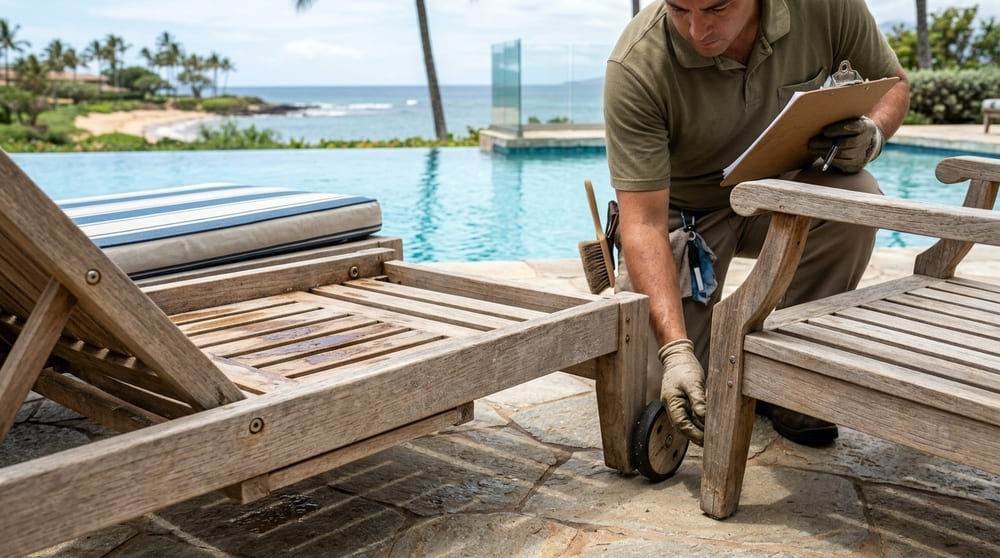
| Poolside | Weekly; clean residue as needed | Pool residue, cushions, hardware, wheels, legs |
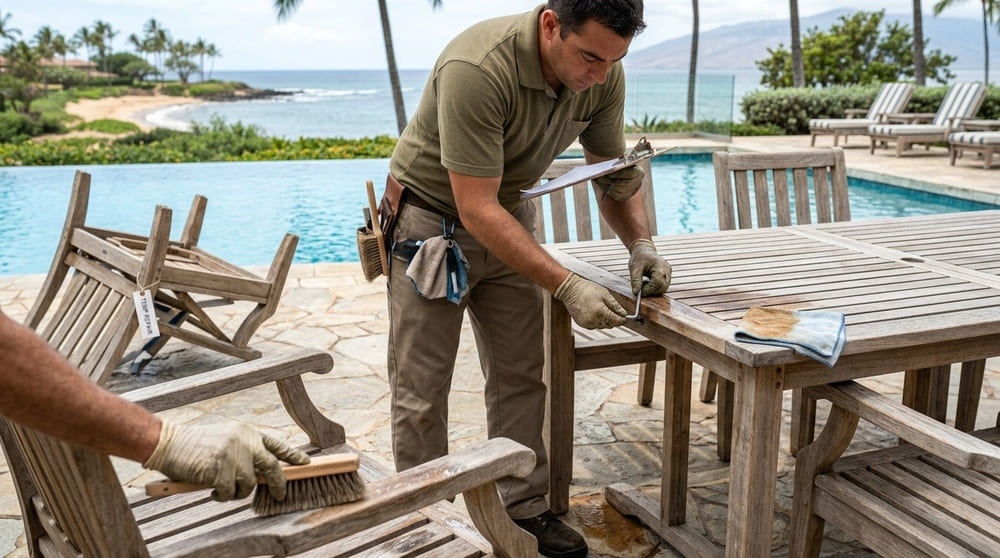
| Coastal area | Weekly | Salt deposits, hardware corrosion, sand abrasion, mechanisms |
| Outdoor restaurant or café | Cleanliness daily; structure weekly | Spills, stains, bolts, legs, joints, stability |
| Hotel or resort | Daily to weekly depending on the zone | Cleanliness, safety, hardware, furniture function |
| Storage area | Monthly and before reuse | Moisture, mold, odor, stacking pressure |
These intervals are starting points and should be adjusted to actual conditions. Outdoor teak furniture generally requires more attention when exposed directly to weather than when placed in protected areas.
Inspect Furniture on Covered Patios Every 2–4 Weeks
Covered outdoor furniture still needs routine inspection because dust, humidity, wind-driven rain, and angled sunlight can reach it.
Check for dust between gaps, moisture underneath the furniture, stains, surface changes, joints, and hardware. Shorten the interval when the patio regularly receives rain splash or direct afternoon sunlight.
For additional protection considerations, see whether you need to cover your patio furniture.
Inspect Furniture in Open Gardens Every 1–2 Weeks
Garden furniture needs more frequent inspection because it receives direct exposure to rain, sunlight, moisture, and changing weather conditions.
Check:
1. Standing water or trapped moisture
2. Water inside gaps and joints
3. Legs in contact with wet surfaces
4. Mold or visible staining
5. Rough surface areas
6. Joints and overall stability
Add an inspection after heavy rain or strong winds rather than waiting for the next scheduled check.
Inspect Poolside Furniture Every Week
Teak furniture maintenance around pools should focus on areas where water, residue, and trapped moisture can accumulate.
Inspect the areas beneath cushions, furniture legs, bolts, wheels, and lounger mechanisms. If residue or persistent moisture is already visible, clean and dry the affected area immediately rather than waiting for the next weekly inspection.
Inspect Furniture in Coastal Areas Every Week
Teak furniture maintenance in coastal areas should cover both the teak surface and metal components exposed to salt and sand.
Check for:
1. Salt deposits
2. Corrosion on hardware
3. Sand abrasion
4. Damp joints
5. Mechanisms becoming difficult to operate
Shorten the inspection interval when furniture is positioned close to the shoreline or directly exposed to sea winds.
Check Commercial Furniture Cleanliness Every Day
For hotels, resorts, restaurants, cafés, and beach clubs, cleanliness checks should be part of daily preparation before guests use the area.
Inspect for:
1. Food and beverage spills
2. Stains and surface residue
3. Bird droppings
4. Wet cushions
5. Dirt on surfaces and between gaps
Commercial outdoor furniture maintenance requires closer attention because hospitality furniture can be used repeatedly throughout the day and by many different guests.
Inspect Commercial Furniture Structure Every Week
In addition to daily cleanliness checks, commercial furniture should receive regular structural inspections to identify stability or functional problems.
Check the legs, frame, joints, bolts, backrests, wheels, and folding or reclining mechanisms. Shorten the interval for furniture that receives particularly heavy use or is frequently moved.
Hospitality buyers can also review this guide on how to choose teak furniture for hotels when selecting products for high-use areas.
Inspect Stored Furniture Every Month
Furniture in storage still needs periodic checks because humidity, poor ventilation, and improper stacking can affect its condition.
Inspect for moisture, mold, unusual odors, airflow, pressure caused by stacking, and structural condition. Before returning the furniture to use, check the joints, hardware, and stability again.
Perform Additional Inspections After Heavy Rain or High Use
Some conditions require immediate inspection rather than waiting for the regular teak furniture maintenance schedule.
Perform an additional check after:
1. Heavy rain or standing water
2. Strong winds
3. Large events or unusually heavy use
4. Furniture falls or impacts
5. Repeated relocation
6. Recurring problems
These additional inspections help identify developing issues before they become more difficult to address.

Shorten the Schedule When Furniture Exposure Increases
A teak furniture care by climate and exposure approach means the inspection schedule should become more frequent as environmental or operational exposure increases.
| Additional Condition | Schedule Adjustment |
| Repeated rain or standing water | Inspect after rain and shorten the routine interval |
| Direct sunlight throughout the day | Inspect surfaces more frequently |
| High humidity | Check undersides, gaps, and signs of mold |
| Pool or salt residue | Add cleaning and hardware checks |
| Heavy commercial use | Perform daily cleanliness checks |
| Frequent relocation | Check joints and stability more often |
A chair under a covered hotel terrace should therefore not automatically follow the same maintenance schedule as an identical chair positioned directly beside a swimming pool.
Determine the Action Based on Inspection Results
The schedule determines when to inspect, while the furniture's actual condition determines what maintenance action is required.
| Inspection Finding | Initial Action |
| Dust or surface residue | Clean the affected area |
| Moist surface or gaps | Dry and identify the moisture source |
| Loose bolts | Tighten and recheck stability |
| Surface changes | Evaluate the existing finish or treatment |
| Mold or staining | Clean according to the condition |
| Damaged components | Repair or replace as necessary |
Most importantly, an inspection schedule should not automatically become an oiling or refinishing schedule. Whether surface treatment is needed depends on the existing finish, surface condition, manufacturer recommendations, environmental exposure, and the appearance the owner wants to maintain.
Natural color changes also need to be distinguished from damage. Untreated teak can gradually develop a silver-gray patina when exposed outdoors, so a uniform gray appearance alone does not necessarily indicate deterioration.
Stop Using Furniture That Is Unstable
Furniture should be temporarily removed from service when an inspection identifies a condition that may affect safe use.
Examples include:
1. Unstable legs
2. Loose structural joints
3. Cracks in load-bearing components
4. Detached hardware
5. Unsafe folding mechanisms
6. Reclining mechanisms that no longer operate correctly
Inspect and repair the affected furniture before returning it to a residential or commercial area.
Record Maintenance Schedules and Findings for Commercial Furniture
Hotels, resorts, restaurants, and other properties managing many furniture units can use simple maintenance records to identify recurring problems.
Record the inspection date, location, product, findings, corrective action, safety status, and next inspection date. Over time, these records can show which locations or furniture types require more frequent attention.
FAQ About Outdoor Teak Furniture Maintenance Schedules
The following questions help distinguish routine inspections from cleaning, surface treatment, and repair requirements.
1. How Often Should Outdoor Teak Furniture Be Maintained?
The frequency depends on location, environmental exposure, and intensity of use. Inspection, cleaning, surface treatment, and repair do not need to follow the same schedule.
2. Should Outdoor Teak Furniture Be Inspected After Rain?
Yes, especially after heavy rain. Check for standing water, trapped moisture, damp furniture legs, signs of mold, and changes in stability.
3. Does Teak Furniture Under a Roof Still Need Maintenance?
Yes. Covered furniture can still be exposed to dust, humidity, wind-driven rain, and sunlight entering from the sides.
4. Does Outdoor Teak Furniture Need Teak Oil on a Regular Schedule?
Not necessarily. The decision to apply teak oil or another surface treatment should depend on the existing finish, surface condition, manufacturer recommendations, and the appearance you want to maintain.
5. Does Gray Teak Furniture Mean the Wood Is Damaged?
Not necessarily. Untreated teak can naturally develop an even silver-gray patina outdoors. This should be distinguished from mold, moisture stains, finish failure, or structural cracking.
6. When Should Outdoor Furniture Be Temporarily Removed from Use?
Remove it from use when unstable legs, loose structural joints, cracked load-bearing parts, detached hardware, or unsafe folding or reclining mechanisms are found.
Conclusion
If teak furniture is placed in a covered area with limited exposure, start with a longer inspection interval. If it is positioned in an open garden, poolside, coastal area, or high-use commercial space, inspect it more frequently and add checks after severe exposure. Most importantly, let the inspection results—not the calendar alone—determine whether the furniture needs cleaning, surface treatment, tightening, or repair.
Choose Teak Furniture with Its Outdoor Environment in Mind
Maintenance becomes easier to manage when the furniture is selected with its placement and usage conditions in mind. Homeowners, hotels, resorts, restaurants, cafés, beach clubs, and project buyers can share their location, environmental exposure, and expected usage with Kusuma Furniture when considering teak furniture such as fixed chairs, folding chairs, extended tables, folding tables, loungers for residential and commercial outdoor areas.
Recent Articles